In August 2025, I sat in Dubai International Airport, exhausted and disappointed. I had just attempted Mount Elbrus in Russia. I did not make it to the summit.
I pulled out my phone and sent a WhatsApp message to one person.
Suleiman Al Naabi.
His reply changed how I define leadership. And it had nothing to do with climbing. It had everything to do with what a leader says when someone comes back empty-handed.
Two 8,000-Meter Peaks in Less Than 24 Hours
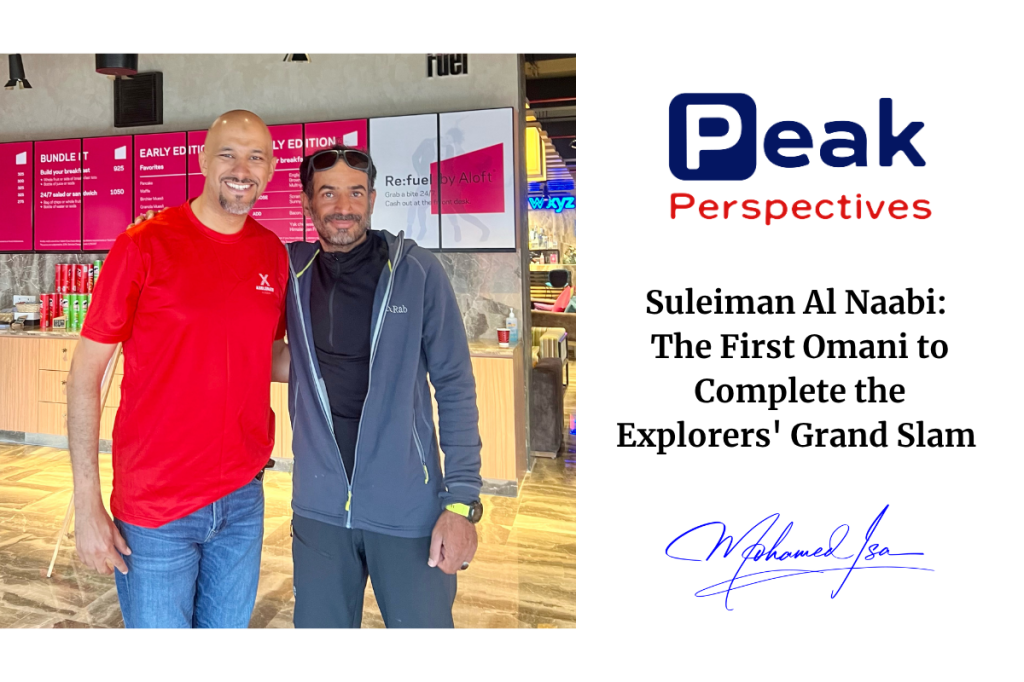
I first met Suleiman in May 2022 at the Aloft Hotel in Thamel, Kathmandu. I had just returned from my trek to Everest Base Camp. He had just returned from something else entirely. He summited Everest, then climbed Lhotse less than 24 hours later.
Our whole team surrounded him. Photos. Questions. More photos. I asked him the one question that had been burning in my mind:
“What is more important for climbing, physical or mental preparation?”
He did not even pause.
“It is 80% mental and 20% physical.”
Later, I read what elite climbers say about the mind game. They all say the same thing. But hearing it from a man who had just spent 24 hours in the Death Zone? That is a different lesson altogether.
From a Physics Classroom to Every Summit on Earth
Here is the part of Suleiman’s story I love most. He was a physics teacher.
In September 2015, he joined what he thought was a simple educational trip to Mount Kilimanjaro. He did not even know the Seven Summits Challenge existed. His trip leader told him about it. And something clicked.
What followed was ten years of steady, disciplined work. In 2016, he became the first Omani to summit Aconcagua, the highest peak in South America. In 2019, he took on Denali in Alaska, a mountain where climbers haul their own sleds through brutal cold, and became the first Omani to stand on top of North America. Then Everest and Lhotse in 2022. Then Mount Vinson in Antarctica and the Geographic South Pole. Then the Arctic.
By February 2025, Suleiman was the first Omani to complete both the Seven Summits and the Explorers’ Grand Slam: all seven continental peaks, plus both Poles. Today, he leads the “Young Traveler” project, training Omani youth in safe adventure and environmental awareness.
In January 2026, the Sultan of Oman honored him with the Royal Commendation Order (Second Class) in the field of sports and youth. When asked about it, Suleiman said the medal represents “a national honor and trust” that motivates him to turn his experience into “sustainable impact for Omani youth” and to link “individual achievement to the national institutional path.”
When I read that, I went quiet.
Ten years. Every continent’s highest peak. Both Poles. And when his nation honors him at the highest level, his first thought is not about himself. It is about the next generation. He carried Oman’s flag to the roof of the world, to the bottom of the Earth, and to every continent in between. Now he wants to make sure others can follow.
The Man Who Drove Me Back to My Hotel
We stayed in touch after Kathmandu.
In 2023, I asked for his advice before climbing Mount Kosciuszko in Australia. His answer was classic Suleiman: “You do not need an expedition company. Wear your boots and follow other hikers on the trail. You will reach the top.”
He became my advisor for that climb. And when I summited in January 2024, he was the first person I messaged.
In May 2024, we had dinner at a fine Indian restaurant in Oman. When it was time to leave, he refused to let me take a taxi back to my hotel, even though driving me made his own trip home longer.
Think about that. A man who has stood on the highest point of every continent, driving a friend to his hotel because it is the right thing to do.
So, when his reply to my Elbrus message arrived, I pressed play immediately.
Two Minutes and Eighteen Seconds
It was a voice note. Two minutes and eighteen seconds long.
I have played it in five leadership workshops in Riyadh, Saudi Arabia. Every time, the room goes silent. And I understand why.
Suleiman did not say, “Better luck next time.” He did not offer empty encouragement. He gave me three lines I still carry with me.
1. Safety over summit.
“Reaching the summit is important, but safety is the most important thing.”
In business, we chase quarterly targets and product launches as if they were Everest. But what good is the summit if you destroy your health, your team, or your company getting there? The best leaders know when to turn back.
What target are you chasing right now that is quietly harming your team?
2. Stopping was the right decision.
“Your decision was very appropriate. The right and wise thing to do. You turn back when you feel pain or when you sense there is danger.”
He did not brush off my disappointment. He validated my judgment. How often do we do that for our teams when a project is cancelled or a deal falls through?
When did you last praise someone for stopping at the right time?
3. The peaks will wait.
“The final joy is that you come back to us completely safe. And the peaks will still be there.”
This is a man who spent ten years on the world’s highest peaks and witnessed fatal accidents along the way. He knows dead climbers never get a second chance. Neither do burnt-out executives.
What can wait until next quarter without costing you what matters?
How You Hold Someone Up
He ended his voice note with this:
“You have determination and energy. You are a positive person. You love life, and you love adventure. May God protect you.”
Suleiman went from a physics classroom to every continental high point and both Poles with systems, discipline, and a decade of patience. But his greatest leadership lesson did not happen on a summit. It happened in a two-minute voice note to a friend sitting in an airport, holding a summit he did not reach.
That is leadership. Not how you celebrate the winners. How you hold someone up when they are disappointed.
So, leaders, here is my question for you:
When was the last time you responded to someone’s “failure” by validating their wisdom instead of questioning their effort?
The peaks will still be there. Your people need you now.
And one more thing. Suleiman was a physics teacher. Ten years later, he had stood on the highest point of every continent and at both Poles. If that does not remind you that you can reinvent yourself at any stage, I do not know what will.
What Is Your Everest?
See you at the Summit!
Sources: Oman Observer, Times of Oman, and Oman News Agency (January 2026 interviews).
First published in Peak Perspectives, Mohamed’s LinkedIn newsletter, Edition #14, February 3, 2026.
Bring the Everest story to your leaders
Mohamed’s Everest Leadership keynote turns lessons like these into a working session for executive teams, conferences and leadership retreats.

